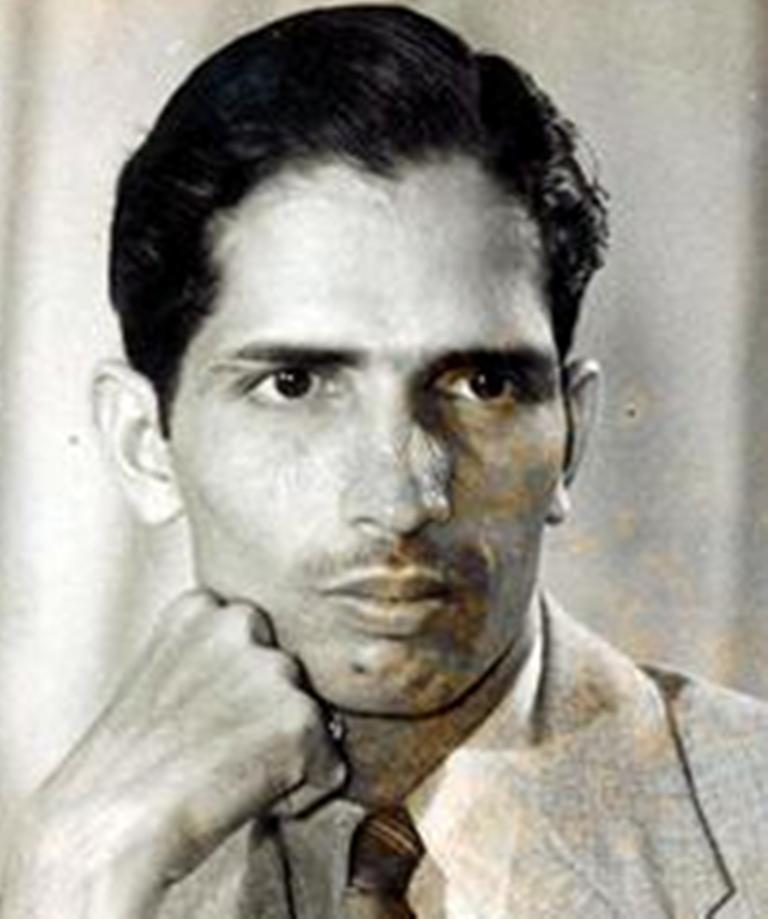
Biography
Kattingeri Krishna Hebbar was an Indian painter and art educator. He is well known for his paintings that captured the social life of the common people in India. Inspired by traditional Indian art, he combined the Western art techniques with his paintings to create a unique style of his own. Painting for Hebbar was about being true to the original self and this is what he tried to achieve in his works. In addition to his paintings, he is also known for his rhythmic line drawings and illustrations. Born: 15 June 1911 Died: 26 March 1996|15 June 1911|df=y Birth place: Kattingeri, near Udupi, Karnataka, British Raj Death place: Mumbai, Maharashtra, India Alma mater: Académie Julian, Paris Sir J. J. School of Art, Mumbai Known for: Painting Spouse: Shusheela Hebbar|1935 }} Children: 3 Wikipedia: https://en.wikipedia.org/wiki/K._K._Hebbar Early life: Hebbar was born on 15 June 1911 in Kattingeri near Udupi, Karnataka in a Tulu-speaking family. He was educated up to the age of five at the local mission school. His father had retired when he was eleven years old. As the family was poor, they made toys, sold them and also made a living from farming. At the age of fourteen, Hebbar got a job at the same school that he had attended. While teaching the play Shakuntala with the help of images, the officer who came to inspect the school noticed Hebbar's artistic talents and encouraged him to take up art education. The latter offered him help and said that if he did not do so, he would suspend him. alt=Painting by K. K. Hebbar|thumb|An Indian Bazaar - Painting executed by K. K. Hebbar for the Govt. Diploma examination in 1938. After matriculation at the age of twenty one, he started his art education at Chamarajendra Technical Institute in Mysore. But after a brief period, Hebbar dropped out of school, tired of the monotonous and arid climate there, and started working for a photographer in Udupi. After seeing Hebbar's work, the photographer advised him to visit Bombay and study art. Hebbar arrived in Mumbai in 1933 and began his studies at Nutan Kala Mandir, an art school established by G. S. Dandavatimath. He worked on retouching and enlargement work at the Koparde Studio located in front of the Chhatrapati Shivaji Terminus. Subsequently, Hebbar joined Sir J. J. School of Art and graduated in 1938 with G. D. in Art. In the year that followed, he completed a specialization in mural painting under the mentorship and encouragement of C. R. Gerrard, then director of the School of Art. Career: Hebbar worked as an art teacher at the Sir J. J. School of Art from 1940 to 1945 and continued to develop his art. Within a short span of six years, he reached the level of well known Bombay artists. Gerrard had later said,"A combination of being a good teacher as well as a good practicing artist is uncommon and Hebbar has combined these rare qualities." After that, Hebbar remained in constant touch with art institutes at different levels and emphasized on the importance of discipline in education. He also presided at several important positions which included the role of chairman at the Artists' Centre, Mumbai (1953-73) JNAF |url=https://jnaf.org/artist/k-k-hebbar/ |access-date=2022-06-14 |website=jnaf.org}} and at the Lalit Kala Akademi, Delhi (1980-84).