Biography
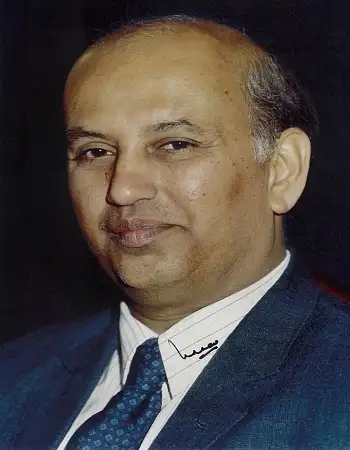
Udupi Ramachandra Rao was an Indian space scientist and former chairman of ISRO. He was also the Chairman of the Governing Council of the Physical Research Laboratory at Ahmedabad and Nehru Planetarium at Bengaluru and chancellor of the Indian Institute for Space Science and Technology (IIST) at Thiruvananthapuram. He is known as "The Satellite Man of India". He pioneered India's first satellite launch Aryabhata in 1975.
Early Life
U. R. Rao was born into a Madhwa Brahmin Hindu family at Adamaru in the state of Karnataka. His parents were Lakshminarayana Acharya and Krishnaveni Amma. He had his primary education at Adamaru. He completed his secondary education from Christian High School, Udupi. He completed his B.Sc. from Government Arts and Science College (now in Andhra Pradesh), M.Sc. from Banaras Hindu University and Ph.D. at Physical Research Laboratory Ahemdabad under the guidance of Vikram Sarabhai.Prof. U. R. Rao was married to Mrs. Yashoda Rao.
Career
Rao started his career as a cosmic ray scientist and worked under Vikram Sarabhai, which he continued at MIT. In association with the Jet Propulsion Laboratory group, he was the first to establish the continuous nature of the solar wind and its effect on geomagnetism using Mariner 2 observations. Rao's experiments on a number of Pioneer and Explorer spacecraft led to a complete understanding of the solar cosmic-ray phenomena and the electromagnetic state of the interplanetary space. Convinced of the imperative need to use space technology for rapid development, Rao undertook the responsibility for the establishment of satellite technology in India in 1972. Under his guidance, beginning with the first Indian satellite "Aryabhata" in 1975, over 18 satellites including Bhaskara, APPLE, Rohini, INSAT-1 and INSAT-2 series of multipurpose satellites and the IRS-1A and IRS-1B remote sensing satellites were designed, fabricated and launched for providing communication, remote sensing, and meteorological services.
Honors & Awards
- 1975 Karnataka Rajyotsava Award
- 1975 Hari Om Vikram Sarabhai Award
- 1975 Shanti Swarup Bhatnagar Award in the Space science & technology field
- 1976 Padma Bhushan
- 1980 National Design Award
- 1980 Vasvik Research Award in the Electronic Sciences & Technology field
- 1983 Karnataka Rajyotsava Award
- 1987 PC Mahalnobis Medal
- 1993 Om Prakash Bhasin Award in the Energy & Aerospace field
- 1993 Meghnad Saha Medal
- 1994 P.C. Chandra Puraskar Award
- 1994 Electronics Man of the Year Award by ELCINA
- 1995 Zaheer Hussain Memorial Award
- 1995 Aryabhata Award
- 1995 Jawaharhal Nehru Award
- 1996 SK Mitra Birth Centenary Gold Medal
- 1997 Yudhvir Foundation Award
- 1997 Rabindranath Tagore Award of Viswa Bharati University
- 1999 Gujar Mal Modi Award for Science & Technology
- 2001 Nadoja Award from Kannada University, Hampi
- 2001 Life Time Contribution Award in Engineering of INAE
- 2002 Sir M. Visvesvaraya Memorial Award
- 2003 Press Bureau of India Award
- 2004 Star of India Award from Vishwabharathy Foundation, Hyderabad
- 2004 Special Award 2004, Karnataka Media Academy